
Last updated November 22, 2026
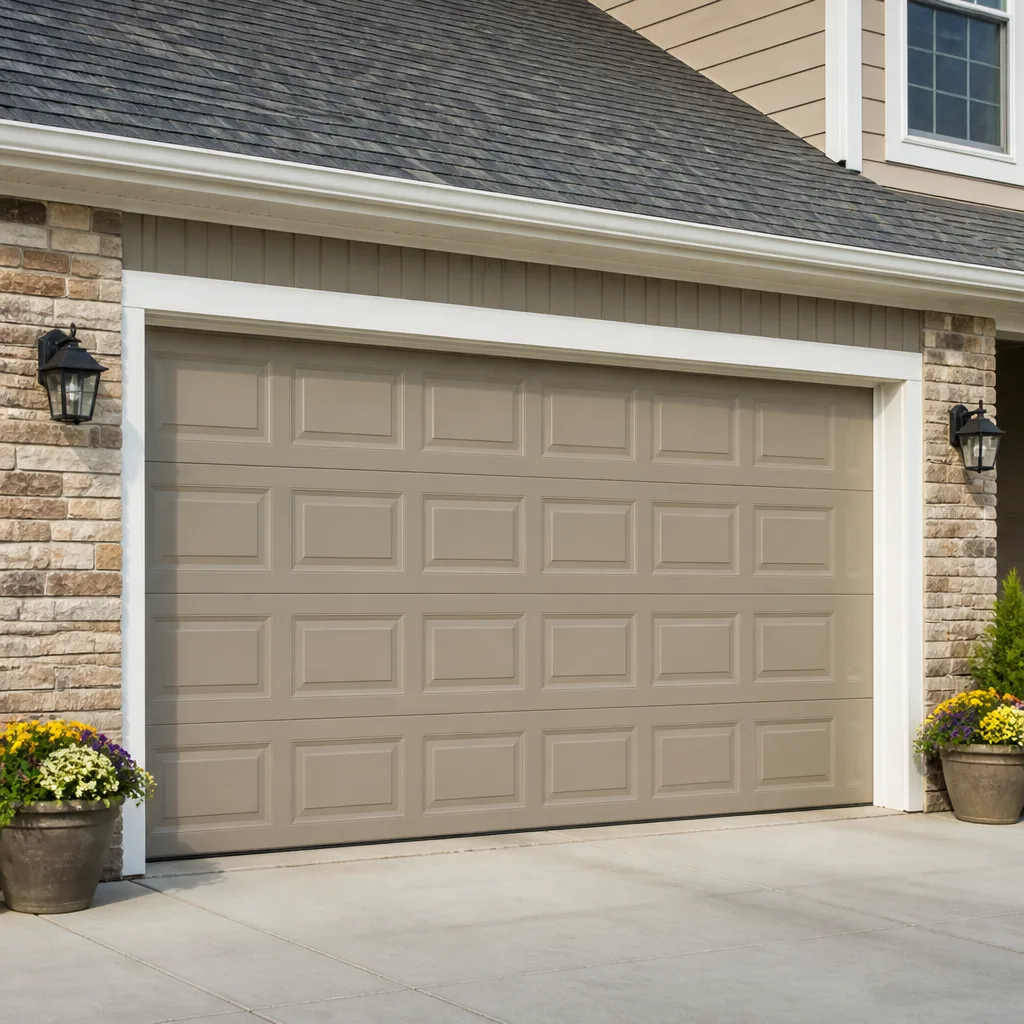 Raised-panel steel
 Carriage house
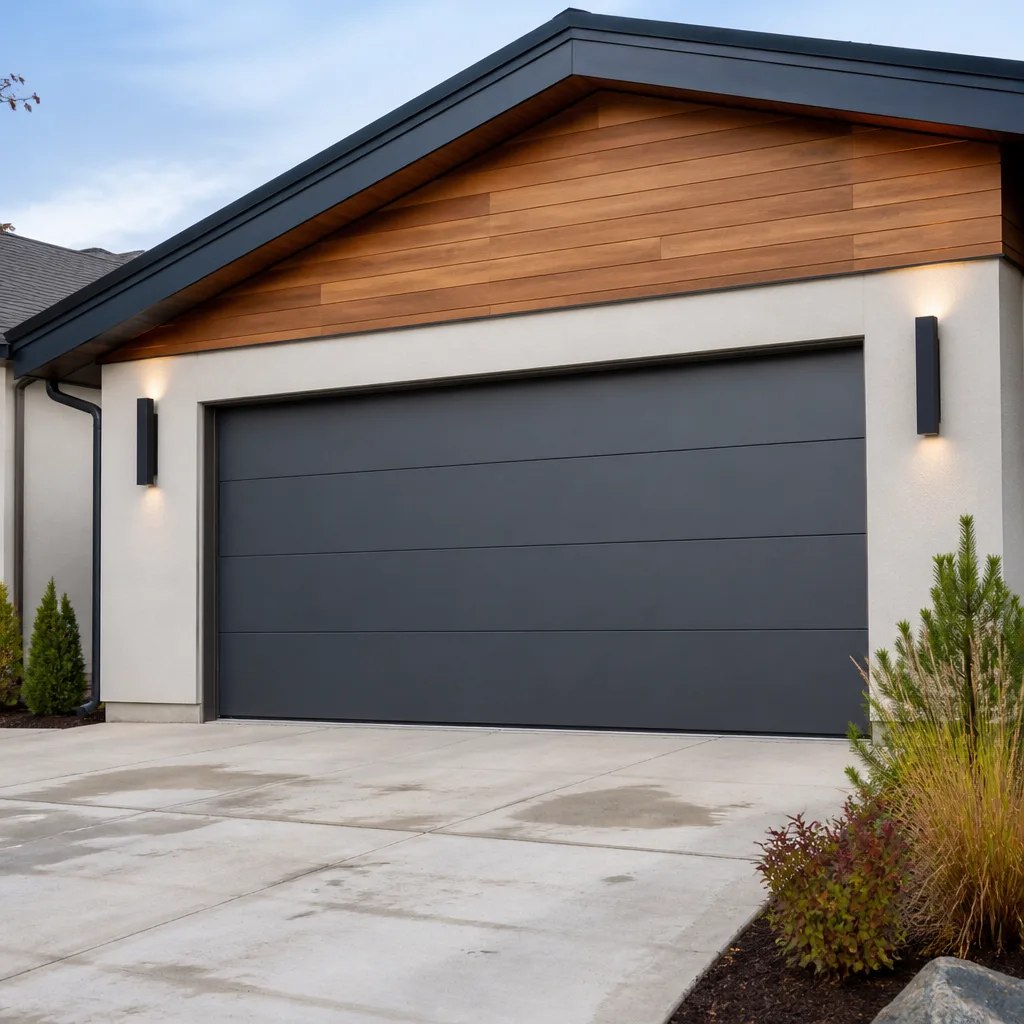 Modern flush
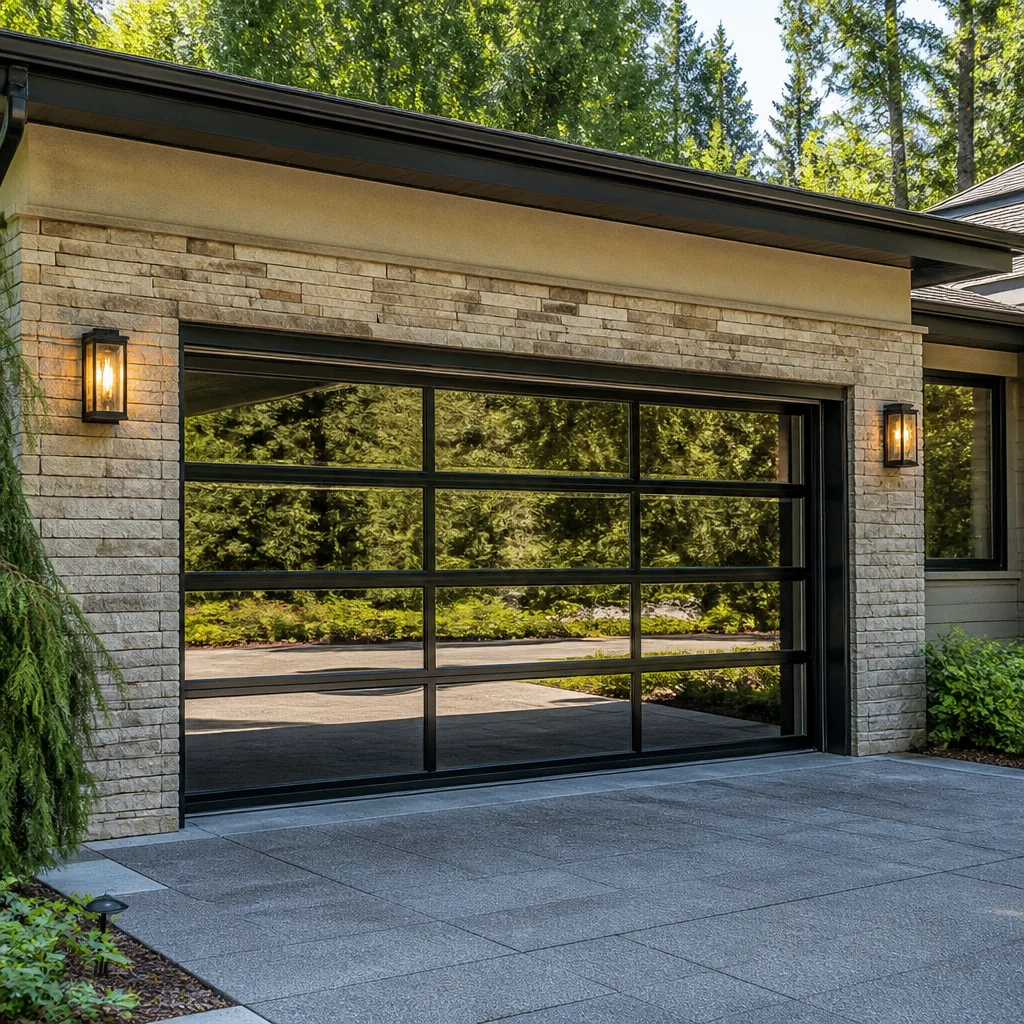 Full-view glass
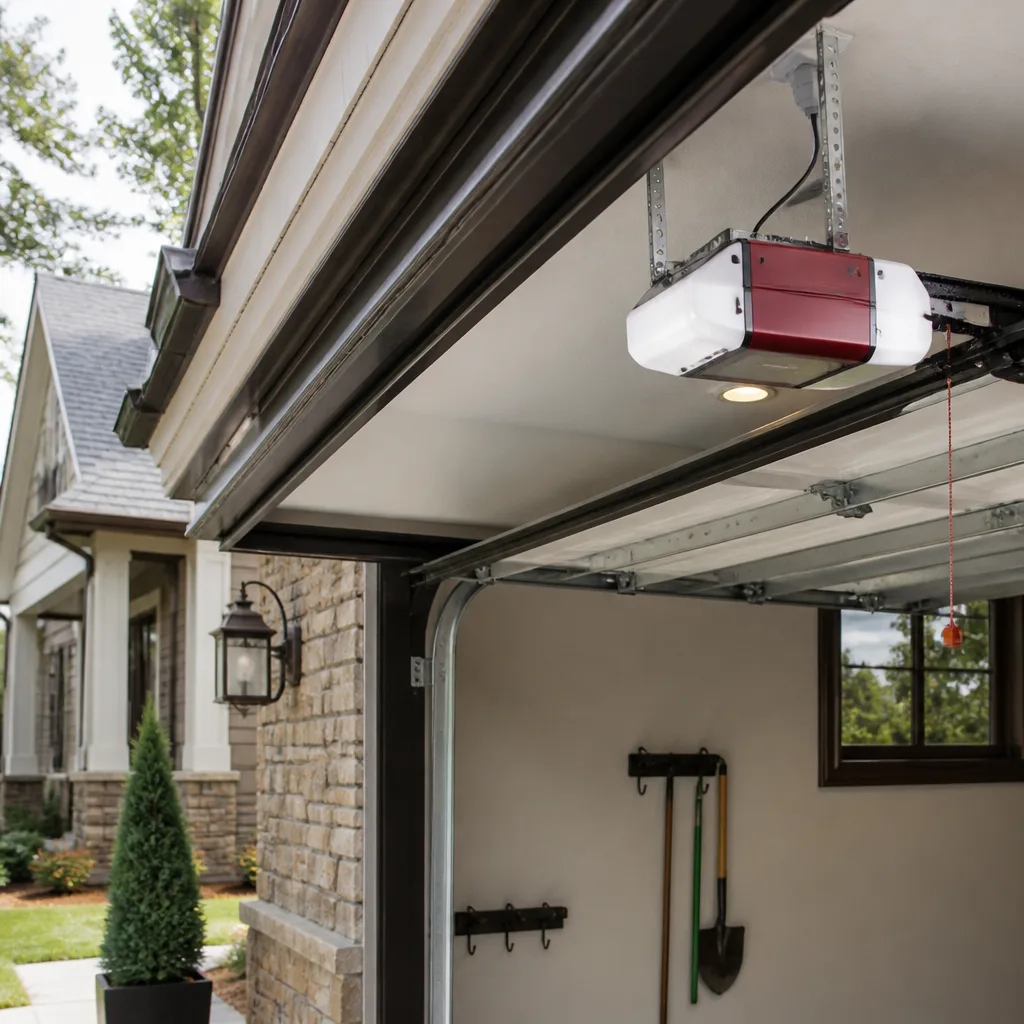 LiftMaster openers
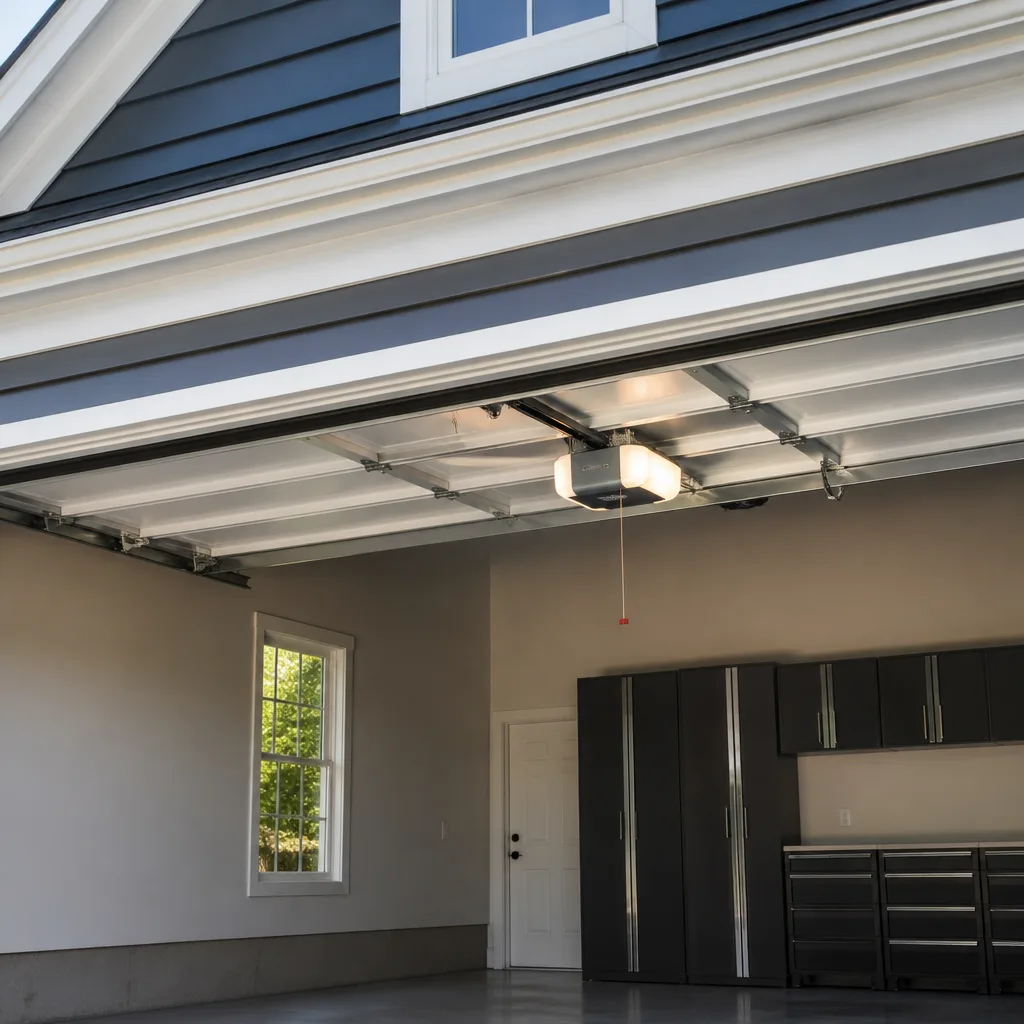 Chamberlain openers
Full 25-point door and opener safety check with every visit - springs, cables, rollers, tracks, and your LiftMaster or Chamberlain opener included
You get a price before we start. It does not change when the pro arrives.
Get your free estimateGarage Door Repair Maintenance Checklist for The Acreage Homeowners
Lubricating your tracks is on every maintenance checklist you’ll find online. What most of those lists leave out is that over-lubricating tracks in a sandy, high-humidity environment like The Acreage creates a grinding paste that wears out rollers faster than no lubrication at all. Sand sticks to wet grease, the paste grinds against every moving part, and the door gets louder and heavier month by month. This guide maps maintenance tasks to the failure patterns that actually happen on The Acreage properties, organized by how often you should do them, with the specific inspection points that irrigation overspray and seasonal storm humidity make necessary. You’ll also learn the safe way to spot spring trouble before it becomes a snapped spring.
Quick Answer
A garage door maintenance checklist for The Acreage homeowners should cover three frequency tiers: monthly tasks like listening for new noises and testing the opener’s safety reverse, quarterly tasks like cleaning and spot-lubricating hardware with a dry or silicone-based product, and annual tasks like inspecting springs, cables, hinges, and weather seals before the rainy season starts in May. In The Acreage’s sandy soil and humid storm season, the highest-priority items are keeping grit out of the tracks, checking rollers for flat spots, and inspecting the bottom seal and apron hardware for irrigation overspray damage. Every task on this list is something you can safely do yourself, with one exception: springs, cables, and brackets under tension belong to a trained technician.
Styles & brands we work with
- Raised-panel steel
- Carriage house
- Modern flush
- Full-view glass
- LiftMaster openers
- Chamberlain openers
Table of Contents
- Why a Generic Garage Door Checklist Doesn’t Fit The Acreage
- The Monthly Checklist: Fifteen Minutes That Catch Most Problems
- The Quarterly Checklist: Cleaning, Lubricating, and Irrigation Hardware
- The Annual Checklist: What to Inspect Before May
- How to Check Spring Tension Safely (and the Cue That Means Stop)
- Weather Seal Inspection Before the Rainy Season
- The Two-Minute Opener Force Test
- When to Call a Professional
- Common Mistakes to Avoid
- Frequently Asked Questions
Why a Generic Garage Door Checklist Doesn’t Fit The Acreage
Most garage door maintenance advice is written for a climate with four distinct seasons and soil that drains. The Acreage sits on sandy soil, and with one-acre-plus lots, irrigation systems are common and often aimed close to the garage apron. When an irrigation head oversprays toward the door, water hits the bottom brackets, the bottom seal, and the concrete apron, then combines with windblown sand to form a slurry that dries onto hinges and rollers. That cycle repeats several times a week during the dry months.
Then the rainy season arrives, usually starting in May. Humidity climbs, and the same hardware that dried out all spring now stays damp. Steel hinge plates start to show surface rust, and the bottom seal that looked fine in February begins to crumble. The sequence is predictable: irrigation overspray and sand first, then humidity, then hardware failure, then a door that sticks, jerks, or stops halfway.
In our experience working on doors across The Acreage, a checklist that ignores this sequence misses the tasks that actually matter here. It also misses a second factor: with acreage lots, the garage door is often the primary entrance used every day, which means more cycles per year than a typical suburban home. That wear adds up faster on tracks, rollers, and opener gears.
Knowing the specific brands installed on homes in The Acreage helps too. Genie openers, Clopay and Amarr steel doors, and Wayne Dalton models show up frequently on properties here. Each has its own maintenance quirks, covered in the sections below.
The Monthly Checklist: Fifteen Minutes That Catch Most Problems
The monthly check is about listening and looking, not tools. It takes about fifteen minutes and catches most small issues before they become repairs. Set a reminder on your phone for the same day each month.
- Open and close the door and listen. A properly adjusted door is quiet. New rattling, scraping, or a grinding sound means something has shifted.
- Look at the tracks on both sides. Run your eye along each rail from floor to ceiling. Any accumulated sand, grit, or debris should be swept out with a stiff dry brush. Don’t add oil to flush it out.
- Check the bottom seal. With the door down, look at the rubber strip touching the floor. Any gap wider than a pencil width lets in water, insects, and warm air, and usually means the seal has flattened or shrunk.
- Test the opener’s safety reverse. Place a roll of paper towels under the door’s path and close it. The door should reverse as soon as it touches the roll. If it doesn’t, stop using the opener until it’s adjusted.
- Watch the door’s travel. As the door closes, watch for wobble, uneven speed, or a shutter in the panels. This usually signals a roller or hinge issue.
- Eyeball the photo-eye sensors. Make sure the small lenses near the floor on each side of the door are clean and aimed at each other. A rag and a mirror is all it takes.
Write down anything you notice, even if it seems minor. A pattern of monthly notes is more useful than trying to remember what the door sounded like three months ago. If something changes suddenly between checks, that’s the moment to call for garage door repair. We answer 24/7, with fast dispatch from 7am to 7pm, Sunday through Friday.
The Quarterly Checklist: Cleaning, Lubricating, and Irrigation Hardware
This is where The Acreage environment forces a departure from standard advice. Most checklists say to lubricate everything, including tracks. In a sandy, high-humidity place, lubricating the tracks is the wrong move. Grease holds sand, sand wears rollers, and a greasy track is harder to clean than a dry one. Use lubricant on hinges, rollers’ bearing points, and springs, and keep it off the track surface.
Products matter here too. A silicone-based spray or a dry-film lubricant works better than heavy grease in this climate because it doesn’t hold grit. A white lithium spray is fine for hinge pins if you wipe the excess. Whatever you use, apply a light coat, cycle the door a few times, then wipe off anything that’s visible. Leaving excess product on the surface is what causes the grinding-paste problem.
The irrigation inspection is the step most homeowners skip:
- Check where your irrigation heads point relative to the garage apron. If one sprays within a few feet of the door, adjust the arc.
- Look at the bottom corners of the door frame and the bottom brackets on the door itself. Discoloration, chalky buildup, or white residue is water plus sand residue.
- Inspect the concrete apron for cracks that channel water toward the door rather than away. A hairline crack can become a small puddle that sits against the seal.
- Check the hinges at the bottom two panels more closely than the upper ones; that’s where overspray lands first.
Also do a professional-grade inspection of the door balance. Disconnect the opener using the manual release and lift the door halfway. Let go. A balanced door stays put or barely drifts. A door that falls means the springs are under-tensioned, and one that rises on its own means over-tensioned. Either condition needs a technician; don’t adjust springs yourself. Our garage door spring repair service handles tensioning and replacement on all the common brands we work on.
The Annual Checklist: What to Inspect Before May
The annual tasks are the ones worth doing in April, ahead of the rainy season onset in May. Getting ahead of the moisture prevents the rust and seal failures that dominate summer service calls.
- Inspect both springs for rust, separation, or a visible gap. Look, don’t touch. A gap in a torsion spring is a sign that it has broken, and a broken spring makes the door dangerous to operate. Call a professional before using the door.
- Look at the cables. Cables run from the bottom corners of the door to the drums above. Frayed strands, kinks, or a cable that’s come off a drum are all stop signs. Don’t attempt to fix them.
- Check the hinges for wear. Look for cracks at the crease and looseness at the screws. A hinge with a wobble is close to failing.
- Inspect track alignment. With the door down, the tracks should be parallel and even. Stand back and look at both sides from six feet away; any visible bend is worth a call.
- Test the opener’s auto-reverse and force settings per the manufacturer’s instructions. Genie and Chamberlain units have slightly different procedures, and both are covered in the owner’s manual.
- Examine the weather seal and the bottom threshold (covered in more detail below).
- Tighten any loose bolts on the hinges and brackets using hand tools only. A ratchet on a track bolt can crack the door panel if it’s over-tightened.
- Look at the paint and finish on steel doors. A scratched steel door left unpainted through the humid season will rust; touch up chips with matching paint.
If your home has an older door, this is also a good time to ask yourself whether the panels are still structurally sound, especially on wood-composite models where delamination can begin at the bottom edges. Clopay and Amarr doors with a damaged bottom section can often be repaired with a replacement panel rather than a full door, but only if the panel is still available. Our parts supply means we can often source a matching panel faster than a contractor who doesn’t carry inventory.
How to Check Spring Tension Safely (and the Cue That Means Stop)
Springs are the high-risk part of any garage door, and they’re the reason “check spring tension” is the most misunderstood phrase on a homeowner checklist. You don’t check spring tension by touching the spring. You check it by observing the door’s behavior with the opener disconnected and the door at rest. The visual cue that matters most: a visible gap or separation in a torsion spring, or a torsion spring that looks visibly stretched compared to its neighbor on a two-spring door.
Here’s the safe routine, in order:
- Close the door and pull the manual release cord to disconnect the opener. Stand clear of the door.
- Lift the door to about waist height by hand. It should feel manageable, not straining.
- Release it gently and let it settle. A door that holds its position is balanced. One that falls is under-tensioned; one that rises is over-tensioned.
- Look (don’t touch) at the springs above the door. Note any gap, visible break, or uneven appearance versus the other spring.
- Listen while slowly opening and closing the door by hand. A clunk, snap, or sudden speed change is a warning.
That’s where the homeowner check ends. Springs, cables, and the brackets that hold them are under high tension, and a slip can cause serious injury. Never adjust, unwind, cut, or remove a spring yourself. Our technicians have up to 10 years of experience, and spring work is the most technically demanding service we handle. We can also check the actual tension with the correct tools, which isn’t possible from a visual inspection alone. If anything on the list above looks off, stop using the door and call (855) 931-4042. The estimate is free.
If the door has lost tension and you need it working, we provide garage door opener repair only when the opener is at fault; a spring issue is never solved by adjusting the motor. Diagnosing the actual cause saves you from paying for the wrong fix.
Weather Seal Inspection Before the Rainy Season
An intact weather seal is the first line of defense against The Acreage’s storm-season humidity. Two seals matter: the bottom seal (the rubber or vinyl strip under the door) and the perimeter seals on the sides and top. Both should be checked in April, before the rain starts in May.
- Bottom seal check: With the door down, slide a piece of paper under the door’s edges and corners. If you can slide it out with no resistance, there’s a gap. A flattened seal, a torn edge, or a seal with visible grit embedded is due for replacement.
- Side seals: Press the seals against the door frame; they should flex and spring back. Hard, cracked, or shrunk seals are the ones that let in water.
- Threshold check: Look at the concrete or wood threshold the door rests on. Any gap between the seal and the threshold is where rain and insects enter.
- Top seal: Usually a simpler strip, but check for wear because the top corner where the seal meets the wall is a common water-entry point.
Seal replacement is a maintenance task that pays for itself in comfort and moisture control alone. It’s also a useful time to check the bottom brackets, which sit right next to the seal and absorb the most irrigation overspray. A bracket with visible rust, or a hinge with a flat spot in its pivot point, is a candidate for replacement the same trip. Keeping these parts on hand is a focus of our parts supply service, which means the fix is usually same-visit rather than waiting for an order to arrive.
The Two-Minute Opener Force Test
An opener that’s straining can’t be seen from the outside. The motor just works harder until it gives out entirely, and by then you’re replacing a full unit rather than adjusting one. The two-minute force test catches the problem early. It’s also the check most homeowners never do.
- Close the door fully and pass under it if you can, or use the wall control.
- Press the wall control to open the door. Watch the door’s head and listen to the motor.
- A smooth pull with a steady motor sound is normal. A short hesitation, a grunt, or a visible hitch as the door starts to move means the opener is overcoming resistance in the door’s hardware or tracks.
- Stop the test and re-test with the door disconnected from the opener. If the door still hesitates when moved by hand, the problem is in the door hardware, not the motor. If it moves smoothly by hand but hesitates when motorized, the opener itself may be at fault.
- Unless you own a force-reading gauge, don’t adjust the opener’s force settings yourself; an adjustment can override the safety reverse and create a hazard. Have a technician confirm the setting.
This test catches motor strain before it becomes a burned-out opener. On a Chamberlain or Genie unit, a consistent hesitation usually traces back to a worn hinge, an ungreased roller bearing, or a track alignment issue. Catching it early is the difference between a hardware repair and a new opener. To learn what that means in cost terms, see our The Acreage Garage Door Repair home page, where we outline typical service categories.
When to Call a Professional
Most of this guide is safe for a homeowner to complete. The line is clear: anything under tension, anything involving electricity, and anything that affects the safety reverse system belongs to a trained technician. Call a professional if a spring has a visible gap or broken coils, if a cable is frayed or off its drum, if the door falls or rises when disconnected from the opener, if the opener hesitates or the safety reverse fails to trigger, or if the door has come off one of its tracks. Any of those is a stop-using-the-door situation.
If the door is loud, uneven, or needs new panels, that’s a lower-urgency call but one worth making before the rainy season starts. The Acreage Garage Door Repair offers free estimates in The Acreage. We work on all eight major brands, so the technician arrives knowing your door and opener, whichever one you have. Call (855) 931-4042. We answer 24/7. Fast dispatch from 7am to 7pm, Sunday through Friday.
Common Mistakes to Avoid
- Lubricating the tracks. This is the biggest one here. A greasy track in The Acreage’s sandy environment collects grit and grinds your rollers. Keep the track clean and dry, and lubricate only the moving parts.
- Using WD-40 as a permanent lubricant. WD-40 displaces moisture and cleans, but it isn’t a lasting lubricant. Use it as a cleaner, then apply a proper lubricant to the hinge pins and rollers.
- Adjusting springs without training. Springs are under enough tension to cause serious injury. A door that “works fine” after a spring has broken is a door that’s about to fail. Leave the adjustment to a professional.
- Ignoring irrigation overspray. If your sprinkler heads spray toward the garage apron, that’s where the door fails first. Adjust the heads so the water stays off the door and check the hardware more often.
- Waiting until the rainy season starts. Seals, hinges, and paint failures are easier to prevent in April than to repair in July. Schedule the annual tasks before the rainy season, not after the first humid week.
- Over-tightening bolts on the track and door. A track bolt tightened too hard can crack a door panel; a hinge bracket can shear a screw head. Snug is enough; a torque wrench is unnecessary for most hardware checks.
- Skipping the opener safety reverse test. This test takes less than a minute and prevents the most common cause of opener-related injuries. Test it every month, not just once a year.
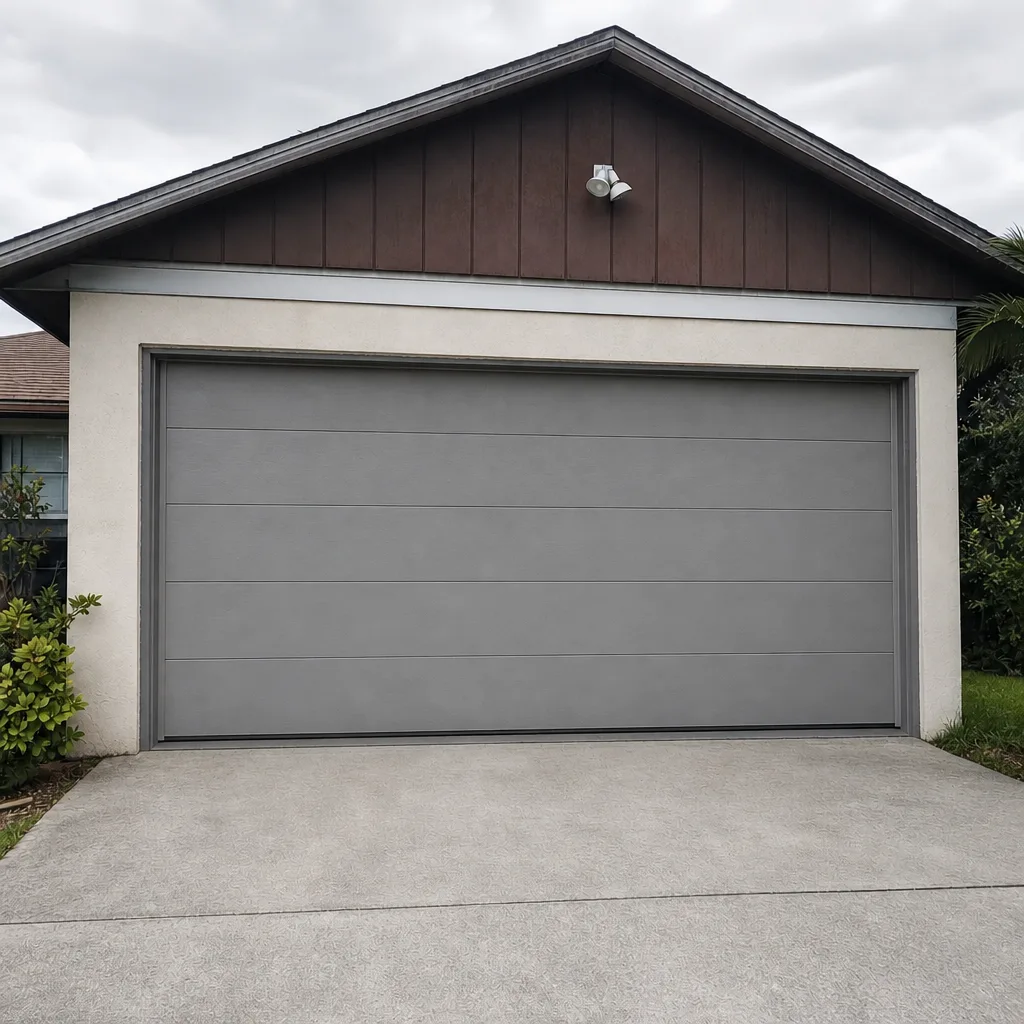
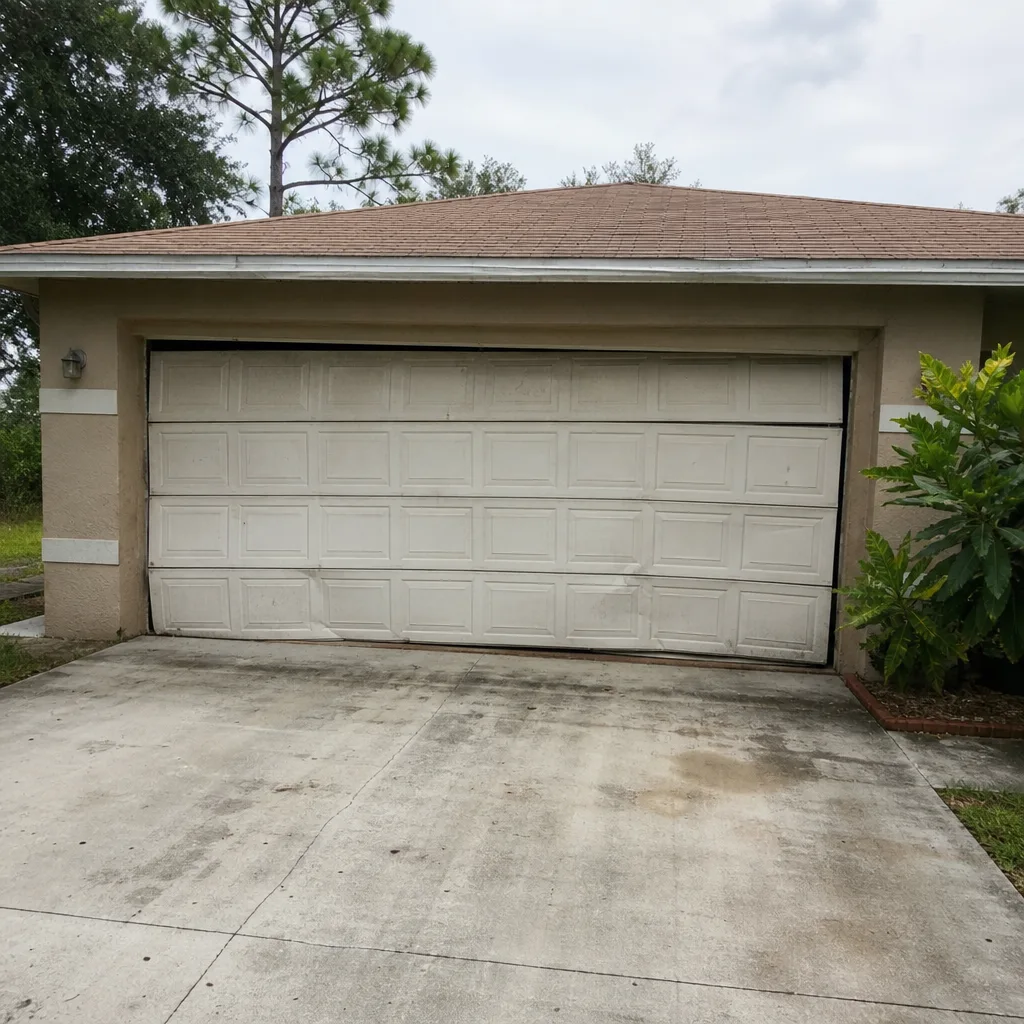
See the difference
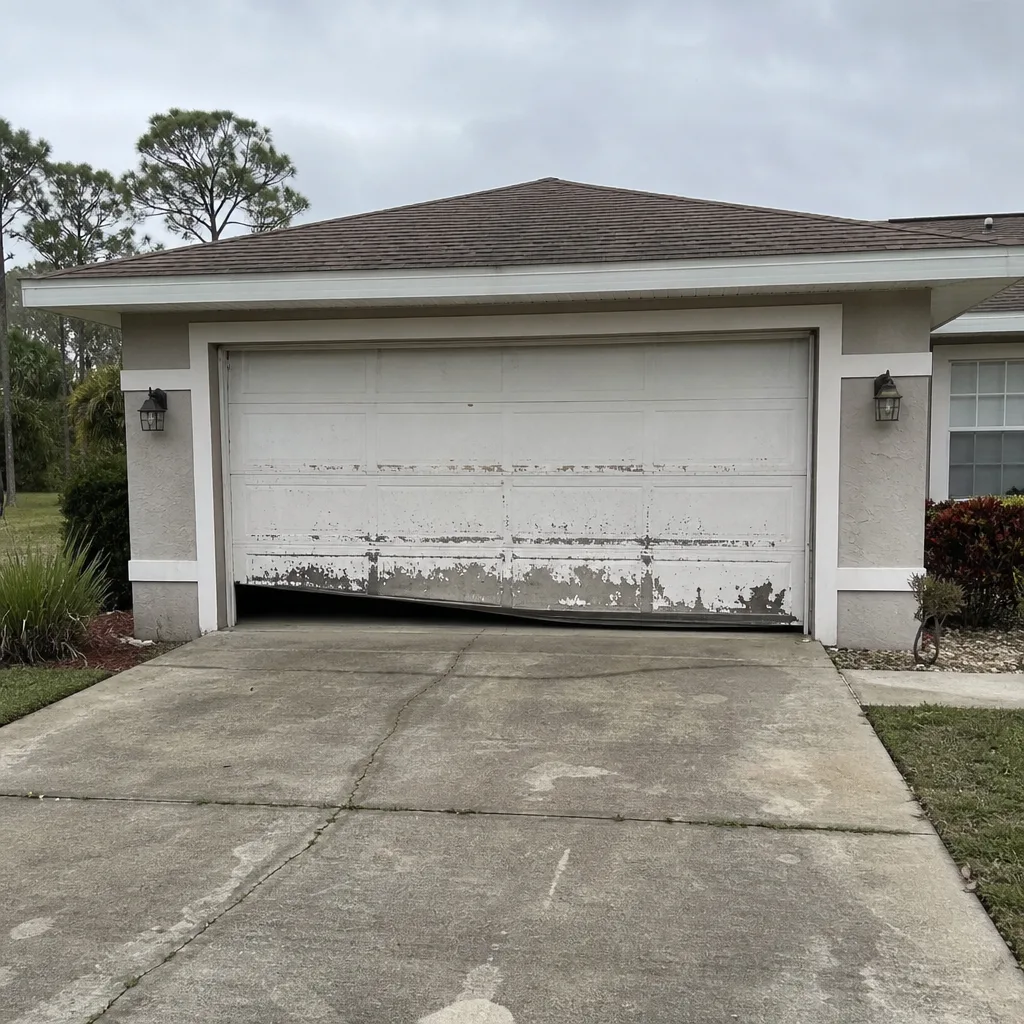 Before
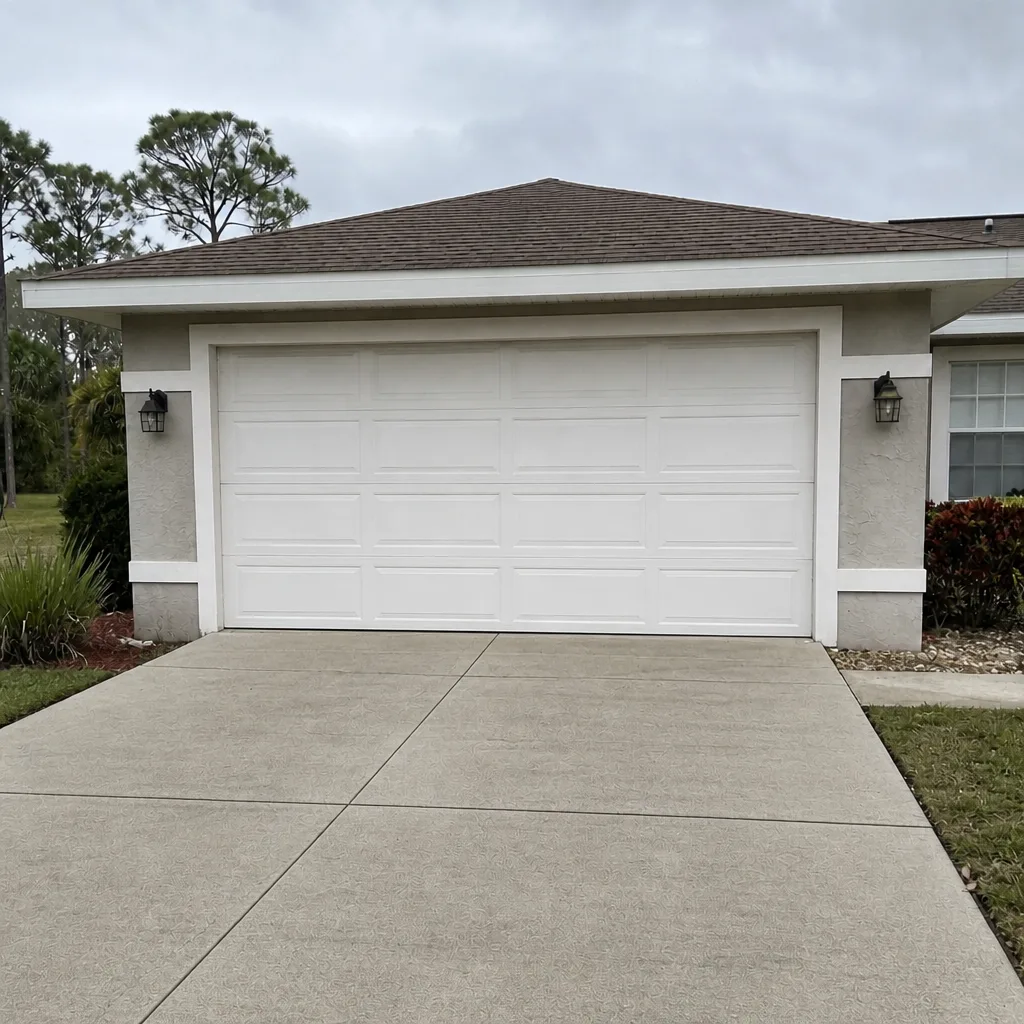 After
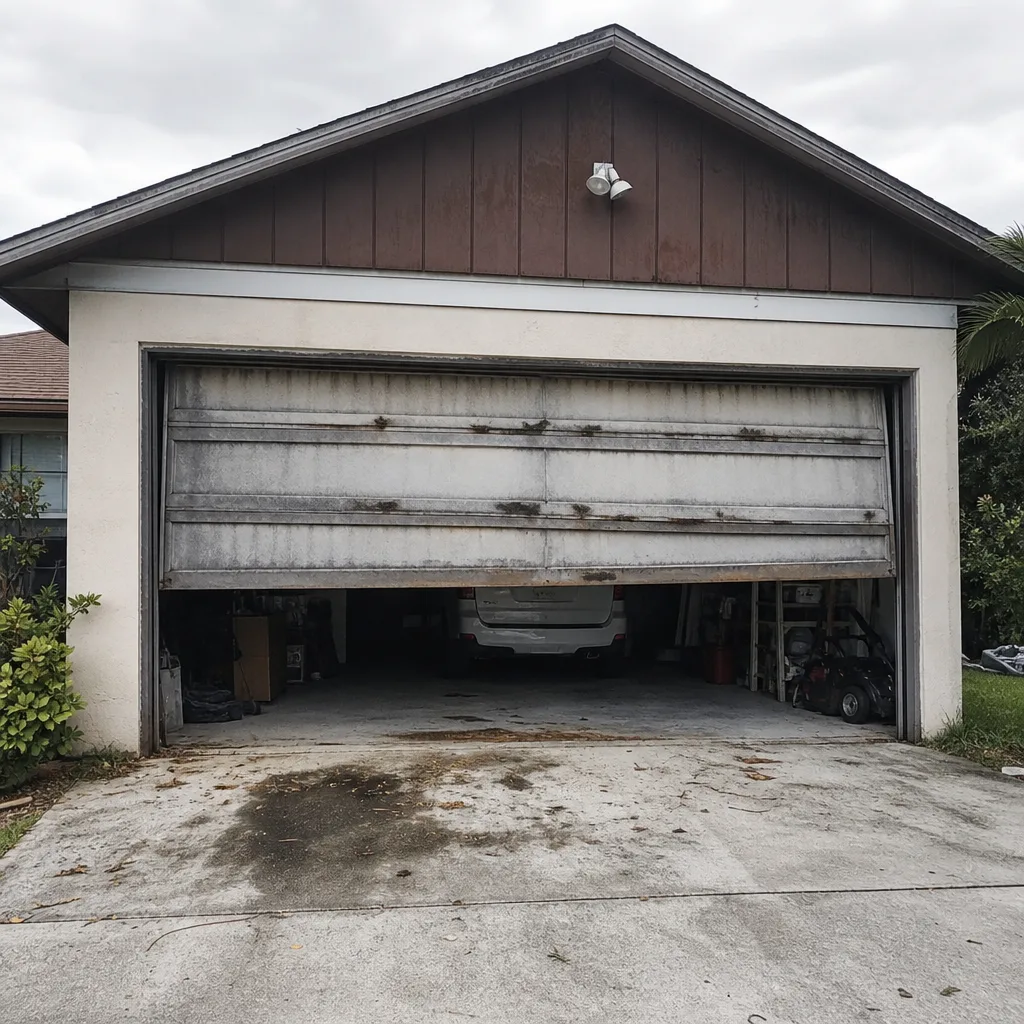 Before
 After
 Before
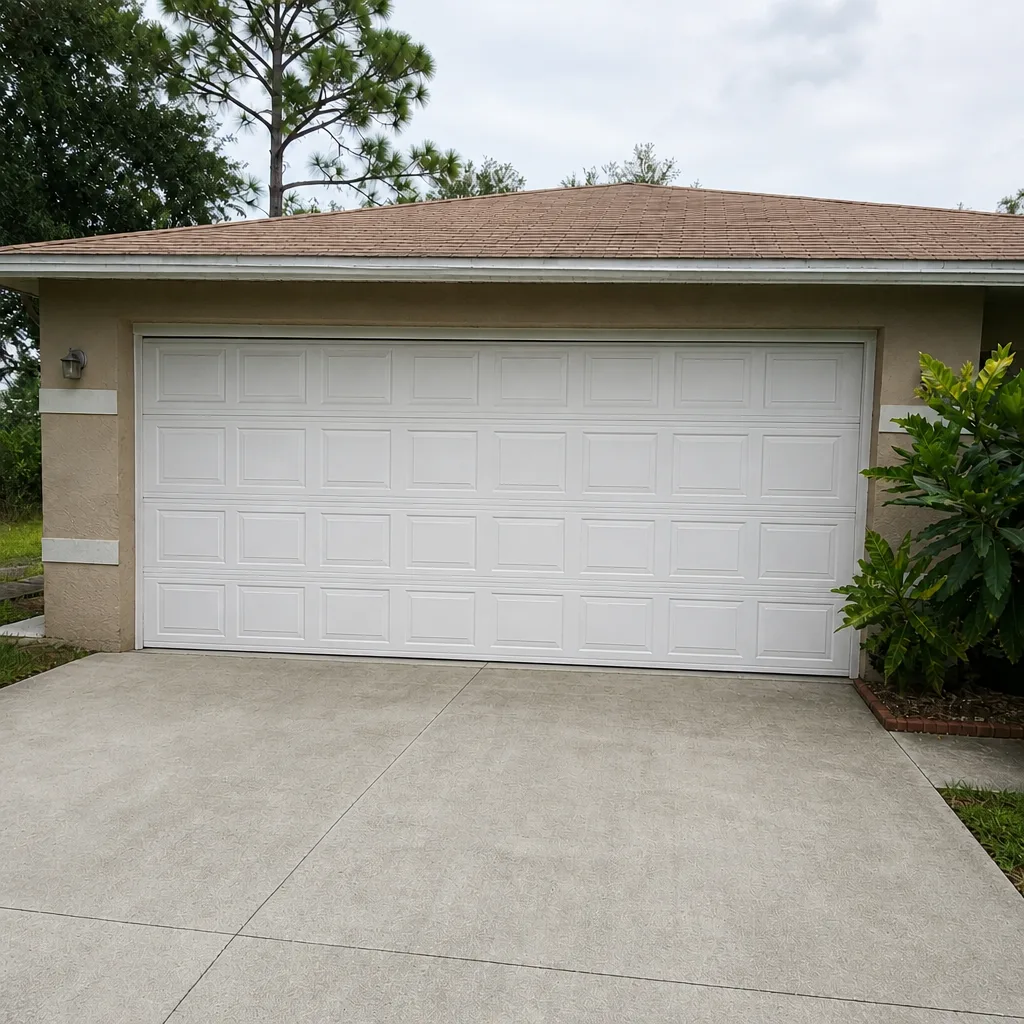 After
Frequently Asked Questions
A full annual check every spring, quarterly cleaning and lubrication, and a monthly listening and safety test. The Acreage environment pushes you toward more frequent checks than a generic climate: sandy soil means monthly track cleaning, and irrigation overspray means checking bottom brackets and hinges on the same schedule as cleaning.
No. Lubricating tracks in a sandy, humid environment creates grinding paste that wears rollers faster than leaving the tracks dry. Clean the tracks with a dry brush and lubricate the hinge pins, rollers, and springs instead. The squeak will go away once the actual moving parts are lubricated; the tracks should stay clean and dry.
A visible gap, a broken coil, or a door that falls when disconnected from the opener are all signs. If the door can’t be lifted by hand without heavy effort, that’s another warning. Don’t touch the spring itself; call (855) 931-4042 and have a technician confirm it. Spring repair is one of our specialties, and it’s one service where the trained professional is essential, not optional.
Two things: irrigation overspray that lands on the bottom brackets and hinges, and the humidity that builds up from May onward. The combination is more corrosive than either alone. Keeping the irrigation heads off the door, touching up paint chips on steel doors, and cleaning the tracks monthly slows rust enough to extend door life considerably.
Check both the bottom seal and the side seals every spring before the rainy season. Replace any seal that’s flattened, torn, cracked, or no longer springy. Most seals last several years, but the irrigation and humidity combination here shortens that, so replace as soon as the paper test shows a gap.
Not necessarily. A hesitation is often a door hardware problem (a worn hinge, a stiff roller, or an out-of-alignment track) that the motor is working against. Test the door by hand with the opener disconnected; if it’s smooth, the motor may be the issue. If it hesitates by hand too, the repair is in the door hardware, which is cheaper than a new opener.
The Bottom Line
The maintenance checklist that works for The Acreage properties is specific: monthly listening and track cleaning, quarterly lubrication and irrigation hardware checks, and an annual inspection that happens in April, ahead of the rainy season. The single biggest mistake is treating the tracks like every other moving part; they should stay clean and dry, not greased. Springs and cables are always a professional call, and the check for them is by eye and by the door’s balance, never by hand on the spring. Do those tasks on schedule and the door lasts longer, opens quieter, and spends fewer of The Acreage’s humid months with the hardware working against it.
Call (855) 931-4042 for a free estimate on any garage door service we handle, from spring repair to opener diagnostics to a full-door installation on a Clopay, Amarr, or Wayne Dalton model. We work on the brand you have, we stock the parts, and we quote the price in writing before any work starts. One call, full fix.
Written by the team at The Acreage Garage Door Repair.